Huarui Honeycomb Technology Co., Ltd : Your Professional Steel Honeycomb Core Manufacturer !
We have been the leading manufacturer of aluminum honeycomb and honeycomb composite materials in South China since 2009. Honeycomb materials can be used in construction, vehicles, railways, ships, furniture, military and other industries. As the industry leader in aluminum honeycomb technology, aluminum honeycomb panels use 3-8mm thin natural stone veneers and are reinforced with aluminum honeycomb panels or fiberglass honeycomb panels, creating a combination of natural aesthetics and ultra-lightweight and sturdy properties.
Rich Product Range
Our company can produce stone honeycomb panels, stone honeycomb backings, aluminum honeycomb cores, EMI shielding ventilation panels, steel honeycomb cores, aluminum honeycomb panels, 5052 aluminum honeycomb cores, etc.
Wide Range Of Applications
The products produced by our company can be widely used in construction, vehicles, railways, ships, furniture, military, technology, explosion-proof, energy storage, filtration and other industries.
Quality Guaranteed
The products produced by our company have been certified by ISO9001:2015, ISO14001:2015 and IMO MED; and have also passed bsi, ISO901, ASTM and other certifications.
Strong Production Capacity
Our company has 10 aluminum honeycomb production lines from 1/25" to 1", with an annual output of 2 million square meters. And our aluminum honeycomb panels are faced with 3-8mm thin natural stone and reinforced with aluminum honeycomb panels or fiberglass honeycomb panels, which not only saves stones, but also reduces the weight of the finished product.

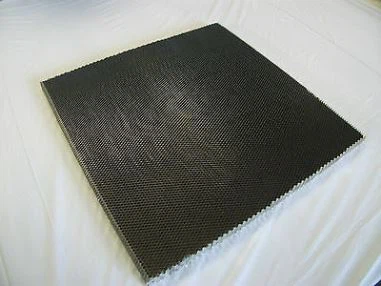
Stainless steel honeycomb is a type of structural material that consists of thin stainless steel sheets arranged in a hexagonal pattern to form cells, much like a beehive. The individual cells are typically sealed at their edges to create a rigid, lightweight core material. The primary advantage of using stainless steel for honeycomb structures is its high strength-to-weight ratio, excellent corrosion resistance, and high temperature tolerance.
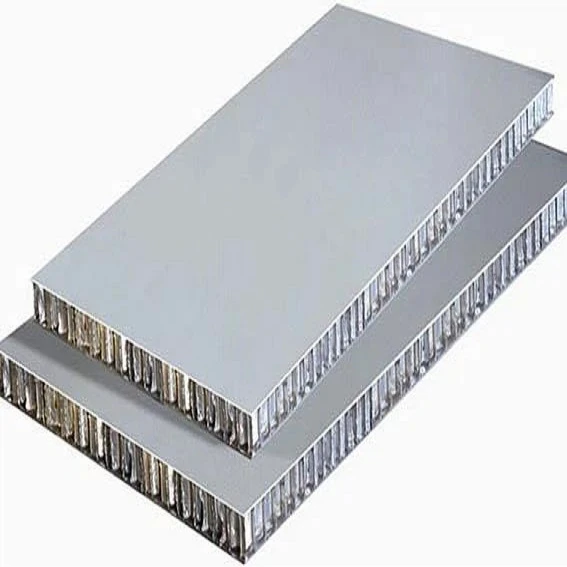
Stainless Steel Honeycomb Panel
A stainless steel honeycomb panel is a composite material consisting of a face sheet made from stainless steel bonded to a core of stainless steel honeycomb. The core is typically produced by compressing thin stainless steel foil into a hexagonal honeycomb configuration, which is then bonded to the stainless steel face sheets using an adhesive or through welding. The resulting panel combines the high tensile strength and corrosion resistance of stainless steel with the lightweight, high-stiffness properties of the honeycomb core. This creates a material that is strong yet light, making it ideal for applications where weight is a concern but high strength and durability are required.

Steel honeycomb mesh is a type of engineered material that resembles a honeycomb in structure but is made from steel wires or strips instead of foils. The mesh is created by weaving or interlocking the steel wires in a hexagonal pattern to mimic the geometry of natural honeycomb. This results in a lightweight, yet strong, open-cell structure. Unlike traditional solid steel plates or bars, the honeycomb mesh offers a balance between strength, weight, and flexibility. It is particularly useful where a combination of high compressive strength and the ability to absorb energy is required. The open cell structure also provides good ventilation and drainage, which can be beneficial in applications such as filtration, acoustics, and protective barriers.

Metal honeycomb core is a high-strength, lightweight material composed of thin metal sheets that are shaped into hexagonal cells, similar to those found in a natural beehive. The core is constructed by alternating layers of metal foil or strips, which are corrugated or fluted to increase their out-of-plane strength. These corrugated sheets are then stacked and bonded together under heat and pressure to form the characteristic hexagonal pattern. The resulting structure is a rigid, yet lightweight core material that can be used in composite panel systems. One of the most common metals used for honeycomb cores is aluminum due to its low density and good strength-to-weight ratio. However, other metals, such as steel, titanium, copper, and magnesium, can also be used depending on the specific application requirements.

Stainless Steel Honeycomb Core
Stainless steel honeycomb core is a type of engineered material that consists of thin, flat sheets of stainless steel arranged in a hexagonal pattern to form a lightweight yet strong structure. The design mimics the natural structure of a bee's honeycomb, which is known for its strength and efficiency. The durability of stainless steel honeycomb core depends on several factors, including the quality of the materials used, the manufacturing process, and the specific application in which it is used. Generally, stainless steel honeycomb core is very durable and has excellent resistance to corrosion, making it suitable for use in harsh environments. It also has high compressive and shear strength, as well as good fatigue resistance.

Honeycomb vent panels are specialized architectural elements designed to provide both ventilation and aesthetic qualities to a space. They consist of a honeycomb core, typically made from materials like paper, aluminum, or plastic, which is sandwiched between two facing materials such as metal, wood, or plastic. The honeycomb structure is lightweight yet strong, offering excellent rigidity and stability while maintaining a minimal profile. The design of honeycomb vent panels allows for air to pass through the small openings of the honeycomb core, facilitating the flow of air throughout a room or building. This makes them ideal for use in areas where discreet ventilation is needed, such as in office spaces, retail stores, hospitals, and airports.

Honeycomb ventilation panels are advanced architectural elements that combine the functionality of ventilation with aesthetic appeal. These panels incorporate a honeycomb structure at their core, which is typically made from materials like aluminum, paper, or plastic. The honeycomb configuration maximizes surface area while minimizing material usage, resulting in a lightweight yet strong and rigid panel. The unique design of these panels allows for efficient airflow; air passes through the tiny openings within the hexagonal cells of the honeycomb core, enabling the distribution of air throughout the space. This makes honeycomb ventilation panels suitable for various environments where discreet and controlled ventilation is required.

Stainless Steel Honeycomb Core
Stainless steel honeycomb core is a type of engineered material consisting of a honeycomb lattice structure made from stainless steel. The core is characterized by its hexagonal cell geometry, which provides a high strength-to-weight ratio, making it exceptionally lightweight while still being very strong and durable. Manufactured through a process that involves cutting thin stainless steel sheets into strips, corrugating or forming these strips into a hexagonal pattern, and then bonding them together under heat and pressure, the resulting product has a three-dimensional structure resembling that of natural beehive honeycombs.

Steel honeycomb core is an engineered material comprising a honeycomb lattice structure made from steel. This core is known for its high strength-to-weight ratio, which is achieved through its unique hexagonal cell geometry. The manufacturing process typically involves cutting thin steel sheets into strips, corrugating or forming these strips into a hexagonal pattern, and then bonding them together under heat and pressure to create a rigid and lightweight structure. The high stiffness and strength of steel honeycomb core, combined with its low weight, make it an excellent choice for various applications, particularly in the aerospace, automotive, and construction industries. It's commonly used as a component in composite sandwich panels, where it serves as a lightweight core material bonded between two face sheets.
Steel honeycomb core is an advanced composite material consisting of thin metal sheets (typically stainless steel) arranged in a repeating hexagonal or other polygonal pattern to form a cellular structure. Each cell resembles the individual compartments found in a natural honeycomb, which is renowned for its structural efficiency. The steel sheets are bonded together using an adhesive to create a lightweight but rigid panel that offers exceptional strength-to-weight and stiffness-to-weight ratios.
Features of Steel Honeycomb Core
Lightweight Yet Strong
One of the key advantages of steel honeycomb core is its remarkable strength-to-weight ratio. The honeycomb structure, consisting of hexagonal cells glued together, allows for maximum strength with minimal weight. This makes steel honeycomb core an excellent choice for lightweight applications where durability and structural integrity are of utmost importance.
Enhanced Rigidity and Stability
Steel honeycomb core offers exceptional rigidity and stability, making it ideal for applications requiring structural support. The honeycomb structure acts as a series of interconnected beams, providing excellent load-bearing capabilities and resistance to bending and deflection.
Improved Thermal and Sound Insulation
By utilizing steel honeycomb core in your metal fabrication projects, you can enhance energy efficiency, reduce thermal conductivity, and create a more comfortable environment for your customers.
Versatility and Customization
Steel honeycomb core is available in a wide range of sizes, cell configurations, and thicknesses, allowing for unprecedented versatility and customization options. Whether you require a specific cell size, cell angle, or panel thickness, steel honeycomb core can be tailored to meet your precise project requirements.
Eco-Friendly and Recyclable
Steel honeycomb core is not only an excellent choice from a performance standpoint but also demonstrates a commitment to sustainable manufacturing. The steel used in honeycomb core production is often made from recycled materials, reducing the strain on natural resources and minimizing environmental impact.
Types of Steel Honeycomb Core


Hexagonal Steel Honeycomb Core
This is the most typical configuration and resembles a natural honeycomb structure, with each cell having six sides. Regular hexagonal geometry provides a balance between strength and weight.
Square Or Rectangular Steel Honeycomb Core
Although less common due to lower packaging efficiency compared to hexagonal shapes, square or rectangular cores are used when applications require a simpler manufacturing process or when directional strength is important.
Diamond Steel Honeycomb Core
In this type, the cells are arranged in a diamond pattern, which provides higher compressive strength in certain directions due to the sloping walls of the cells.
.
Oval Or Rectangular Steel Honeycomb Core
These variants feature elongated units with unique mechanical properties, such as enhanced resistance to bending along the long axis of the ellipse.
Process of Steel Honeycomb Core
Material Selection
The honeycomb core material is made of high-quality steel plate. The selection process may involve considerations such as thickness, strength and corrosion resistance.
Cutting and Shaping
The steel plates are cut to the exact dimensions required for the honeycomb units. Advanced cutting machinery, such as lasers or water jets, can be used to achieve precise cuts.
Formation Of Honeycomb Structure
The cut steel plates are then shaped into a honeycomb structure using specialized forming equipment. The process involves bending and joining sheets together to form characteristic hexagonal units.
Bonding
Adhesives are often used to hold layers of steel together and form a strong honeycomb structure. Apply the adhesive evenly to the surface of the steel panels before pressing them together.
Compression and Solidification
Once the adhesive is applied, the assembled honeycomb structure is compressed to ensure proper bonding and remove any air pockets. Depending on the type of adhesive used, the structure may also undergo a curing process that includes thermal or chemical treatments to enhance the bond.
Quality Control
After the honeycomb core is formed and bonded, it undergoes rigorous quality control inspections to ensure dimensional accuracy, structural integrity and compliance with specifications. This may involve visual inspection, dimensional measurements and mechanical testing.
Surface Treatment
Depending on the intended application, the surface of the steel honeycomb core may receive additional treatments, such as painting, coating, or corrosion protection, to improve durability and performance.
How to Choose Steel Honeycomb Core
Material Properties
Evaluate the material properties of steel honeycomb cores, including strength, stiffness, and weight. Select materials that can withstand the mechanical stresses and environmental conditions faced in their intended application.
Cell Size and Density
Consider the size and density of the honeycomb cells. Smaller units generally offer greater strength and stiffness, but may be heavier. Larger batteries offer better impact resistance and are lighter, but may sacrifice some structural integrity.
Thickness
The thickness of the steel plate used in the honeycomb core affects its overall strength and durability. Thicker sheets provide greater strength but may increase weight and cost. Consider the trade-off between thickness and performance for your application.
Corrosion Resistance
Determine the level of corrosion resistance required for your application. Choose a steel honeycomb core with an appropriate coating or surface treatment to prevent corrosion and ensure long-term durability, especially in harsh environments.
Temperature Resistance
If the steel honeycomb core will be exposed to high temperatures, such as in aerospace or automotive applications, choose a material that can withstand high temperatures without affecting structural integrity or performance.
Application Specific Requirements
Consider any specific requirements or performance standards for your application, such as fire resistance, sound insulation or electrical conductivity. Choose a steel honeycomb core that meets these special needs.
How to Install Steel Honeycomb Core
Positioning
Carefully position the steel honeycomb core in the desired location within the structure or application. Take precise measurements and alignment to ensure a proper fit.
Adhesive Application
Apply a suitable adhesive to the bonding surfaces of the steel honeycomb core and the substrate where it will be attached. Use adhesives specifically designed for bonding metals to ensure strong and durable adhesion.
Pressing and Securing
Once the adhesive is applied, firmly press the steel honeycomb core onto the substrate to ensure full contact and bonding. Apply sufficient pressure to achieve a strong bond, and use clamps or other securing mechanisms to hold the core in place during curing.
Frequently Asked Questions
Q: What is a steel honeycomb core, and how is it used in various applications?
Q: What are the advantages of using steel honeycomb core compared to other materials?
Q: How does the cell size of a steel honeycomb core affect its performance?
Q: What factors should be considered when selecting the thickness of steel sheets for a honeycomb core?
Q: How does corrosion resistance influence the selection of a steel honeycomb core?
Q: What manufacturing processes are involved in producing a steel honeycomb core?
Q: How does temperature resistance impact the selection of a steel honeycomb core?
Q: What role does manufacturing quality play in the performance of a steel honeycomb core?
Q: How do cost considerations influence the selection of a steel honeycomb core?
Q: What are some application-specific requirements that may influence the selection of a steel honeycomb core?
Q: What steps are involved in installing a steel honeycomb core?
Q: What are some best practices for preparing the surface before installing a steel honeycomb core?
Q: How does the structure of a steel honeycomb core contribute to its lightweight yet sturdy nature?
Q: Can steel honeycomb cores be customized to meet specific application requirements?
Q: What role does adhesive selection play in the bonding process of steel honeycomb cores?
Q: How do surface treatments enhance the performance and durability of steel honeycomb cores?
Q: What are some environmental considerations associated with the production and use of steel honeycomb cores?
Q: How do regulatory standards and industry certifications ensure the quality and safety of steel honeycomb cores?
Q: How do advancements in materials science and manufacturing technology impact the development of steel honeycomb cores?
Q: How do research and development efforts contribute to the continuous improvement of steel honeycomb cores?
Hot Tags: metal honeycomb, suppliers China, factory, manufacturers, customized, buy, price, quotation, factory price, insulated aluminum ceiling panels, electronic whiteboard honeycomb panel, metal honeycomb core, aluminum honeycomb ventilation panel, honeycomb core manufacturer, aluminum honeycomb wall facade