



At present, honeycomb structural panels have been widely used in furniture, decoration and packaging industries due to their good load-bearing performance and low manufacturing cost. In addition, the use of aluminum honeycomb panels not only has good environmental protection, but also can be easily recycled after use.
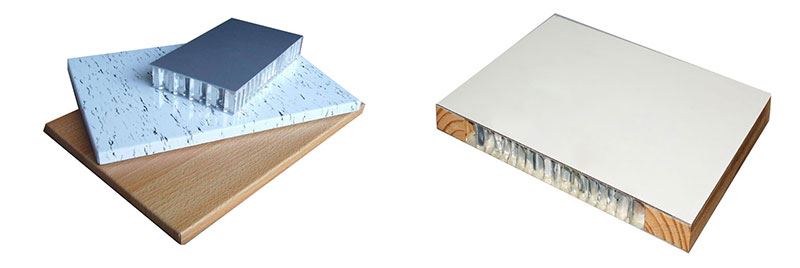
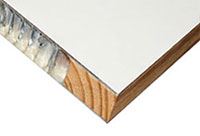
Aluminum honeycomb panel is a panel made of two thin aluminum panels bonded on both sides of honeycomb core material. The aluminum panel can be composited with solid wood, natural veneer, natural marble and other material.
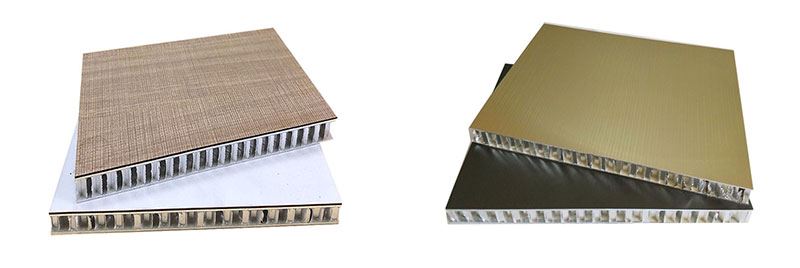
Features:
1. Excellent weather resistance and fire resistance
2. Excellent durability and good torsion strength
3. Lightweight, rigid and superior surface flatness
4. Good impact-resistance and ultra strong peeling strength
5.Good workability, simple installation, easy processing and maintenance
6.Recyclable
The aluminum honeycomb furniture panel can be cut into the required size,through the frameless honeycomb panel edge banding machine, the supporting edge strips and the decorative edge strips are sealed to form furniture panels of various specifications.Since the requirement of furnitures,special methods are needed for edge sealing. There are several methods for edge sealing of honeycomb panels.
1.Use the solid frame strip embedding machine to mill out the aluminum honeycomb core on the edge of the honeycomb panel first, and then embed the solid frame strip with glue. After the honeycomb panel embedded with the solid frame strips has dried, the edges can be sealed with an ordinary edge banding machine.
2.The frameless honeycomb panel edge banding machine adopts the embedded method to seal the thin supporting edge banding strip on the exposed aluminum honeycomb core edge of the honeycomb panel, and then seal the ordinary edge banding strip on the outside.
3.It is a manual edge sealing method. First, a part of the aluminum honeycomb core on the edge of the honeycomb panel is shaved off, and then the upper and lower panels are folded in a little bit to play a supporting role. After that, ordinary edge banding will be carried out.
 |  |  |


