


Hey there! I'm a supplier of honeycomb blocks, and I often get asked the question: "Do honeycomb blocks need curing?" Well, let's dive right into this topic and find out.
First off, let's understand what honeycomb blocks are. Honeycomb blocks are lightweight, strong, and have excellent structural properties. They're used in a wide range of applications, from aerospace to architecture. You can check out our Aluminium Honeycomb Core For Honeycomb Composite Panels and Aluminium Honeycomb Core Blocks to get a better idea of the products we offer.
Now, the curing process. Curing is basically a way to enhance the properties of a material over time. For some materials, it's crucial to go through a curing phase to reach their full potential. But what about honeycomb blocks?
The answer isn't a simple yes or no. It depends on several factors, like the material the honeycomb block is made of, the manufacturing process, and the intended application.
Material Matters
If the honeycomb block is made of aluminum, which is a common material, the need for curing is different compared to other materials. Aluminum honeycomb blocks are often produced through a process that doesn't necessarily require a traditional curing step. The manufacturing process itself, which involves bonding the aluminum sheets in a honeycomb pattern, gives the block its strength and stability.
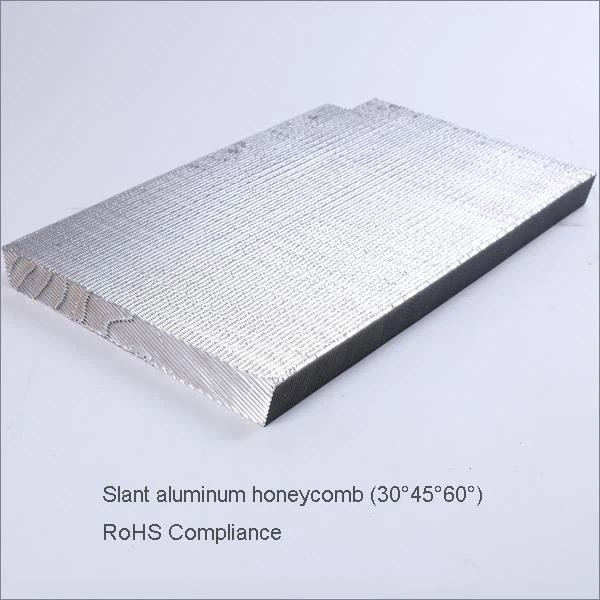
However, in some cases, post - manufacturing treatments can be considered a form of "curing." For example, heat treatment can be used to improve the mechanical properties of the aluminum. This can make the block more resistant to wear and tear, and enhance its overall performance. Our Slant Aluminum Honeycomb can benefit from such treatments in certain applications.
On the other hand, if the honeycomb block is made of a composite material, curing might be a must. Composite honeycomb blocks often contain resins that need to be cured to achieve the desired strength and stiffness. The curing process for composites usually involves exposing the block to specific temperatures and pressures for a set period. This allows the resin to harden and bond the fibers in the composite together effectively.
Manufacturing Process Influence
The way the honeycomb block is manufactured also plays a big role. If the manufacturing process involves using adhesives, these adhesives may need to cure. For instance, when bonding the layers of the honeycomb structure, the adhesive has to set properly to ensure a strong bond. The curing time for adhesives can vary depending on the type of adhesive used. Some adhesives cure at room temperature, while others require heat or a chemical catalyst to speed up the process.
In a high - volume manufacturing setting, the curing process needs to be carefully optimized. If the curing time is too long, it can slow down production. But if it's too short, the quality of the honeycomb block may be compromised.
Intended Application
The end - use of the honeycomb block is another important factor. In applications where the block will be subjected to high stress or extreme conditions, such as in the aerospace industry, proper curing can be critical. A well - cured honeycomb block will be more reliable and less likely to fail under pressure.
In architectural applications, the need for curing may be less strict. However, a cured honeycomb block can still offer better long - term performance, like improved resistance to environmental factors such as moisture and temperature changes.
Benefits of Curing
Even if curing isn't strictly necessary for a particular honeycomb block, there are some benefits to consider. Curing can improve the block's durability. It can make the block more resistant to cracking, warping, and other forms of damage. This means a longer lifespan for the honeycomb block, which is a big plus for customers.
Curing can also enhance the block's aesthetic appeal. In some cases, a cured honeycomb block may have a smoother finish and a more uniform appearance. This can be important, especially in applications where the block is visible.
Drawbacks of Curing
On the flip side, there are some drawbacks to curing. Curing can be time - consuming and expensive. It requires additional equipment and resources, such as ovens for heat - curing or special chambers for pressure - curing. These costs can add up, especially for large - scale production.
There's also a risk of over - curing. If the honeycomb block is exposed to too much heat or pressure for too long, it can damage the material. This can lead to a decrease in the block's strength and performance.
Making the Decision
As a honeycomb block supplier, I always recommend that customers consider their specific needs when deciding whether to cure the honeycomb blocks. If you're unsure, it's a good idea to consult with our team. We have the expertise to help you determine the best course of action based on your application and budget.
In conclusion, the question of whether honeycomb blocks need curing doesn't have a one - size - fits - all answer. It's a complex decision that depends on multiple factors. But whether you choose to cure your honeycomb blocks or not, you can count on us to provide high - quality products.

If you're interested in purchasing honeycomb blocks for your project, don't hesitate to reach out. We're here to discuss your requirements and find the perfect solution for you. Whether you need aluminum honeycomb blocks or composite ones, we've got you covered.
References
- ASM Handbook Committee. (2000). ASM Handbook Volume 1: Properties and Selection: Irons, Steels, and High - Performance Alloys. ASM International.
- Composites World. (2023). Understanding Composite Curing. Composites World Magazine.


